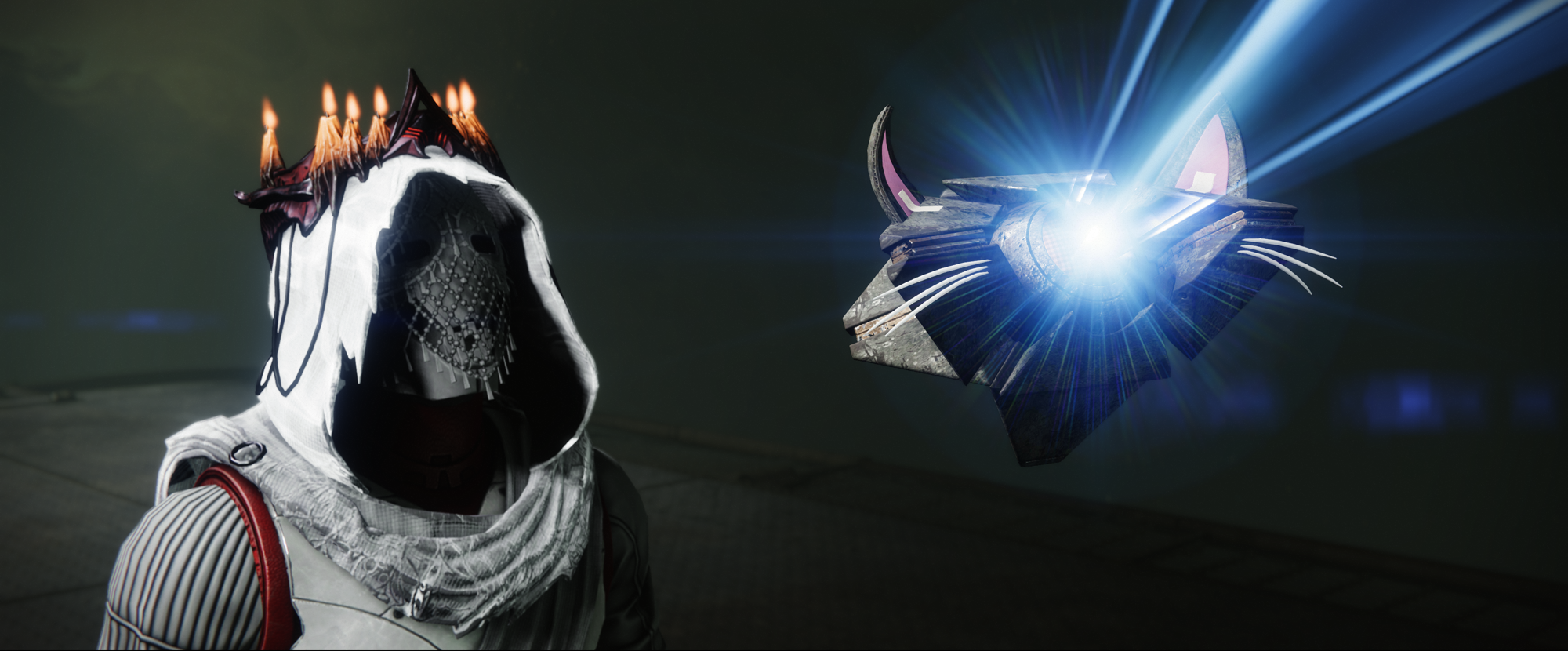
I had no plans to cover Destiny 2: The Edge of Fate. My Guardian and Ghost were enjoying their retirement in The Tower after the conclusion of The Light and Darkness Saga, ready to let new guardians take up the mantle while they took Archie for ‘walkies’.
That changed when Bungie very kindly offered me a review code. Who am I to look a gift (star)horse in the mouth?
While my Guardian dusted off his tartan-shaded boots and set off for Kepler, this review focuses purely on the campaign experience of The Edge of Fate. The Final Shape felt like the perfect offboarding point for me when it came to the Destiny grind. I’ve dipped my toes into a bit of raiding and pinnacle chasing over the years, but I’ve always considered myself a casual player. I enjoy the world of Destiny, its characters, and the satisfying feeling of shooting things in it! The busywork and min-maxing? Not so much.
Kepler? Kep-lore!
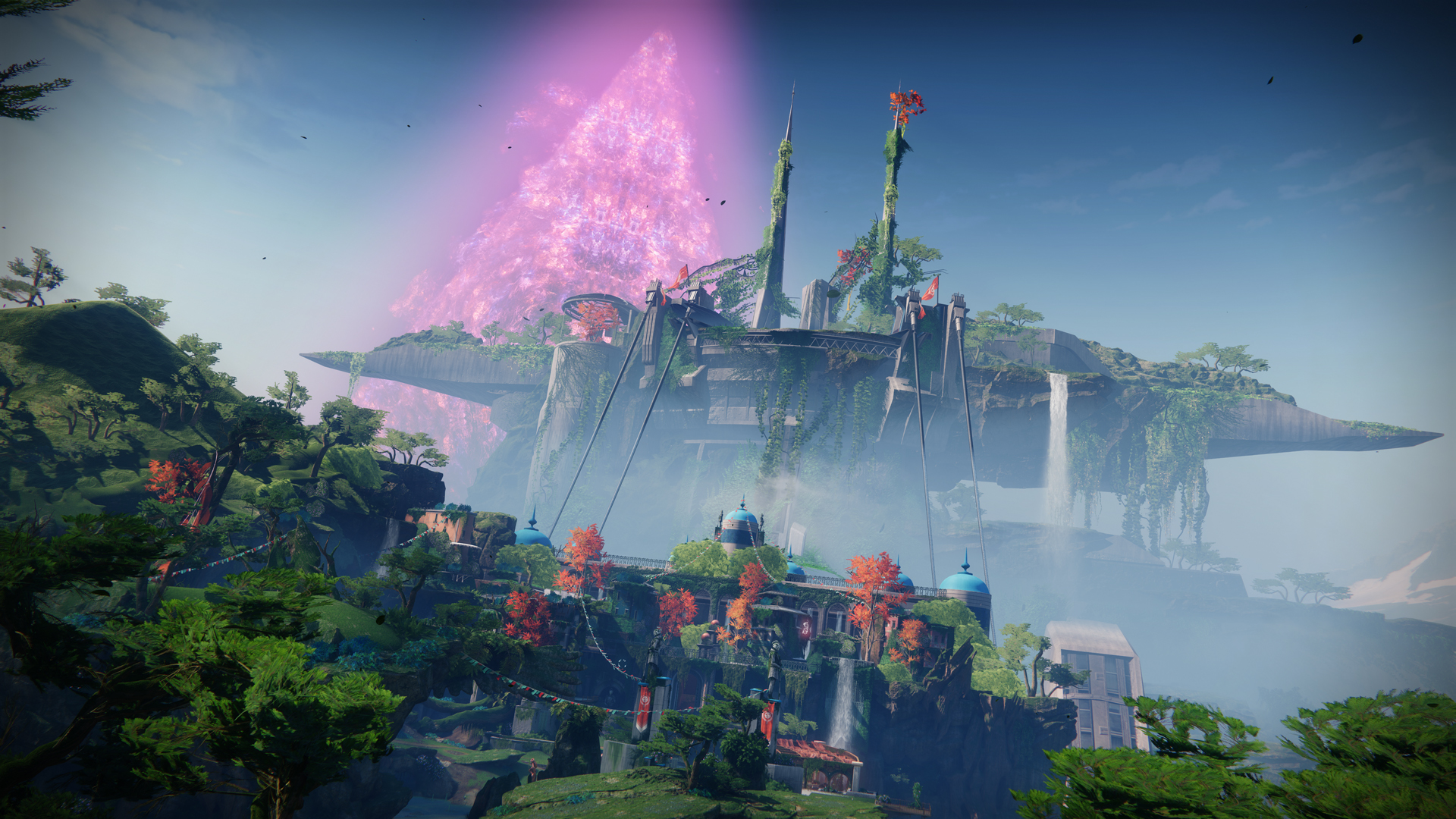
The Edge of Fate opens with a magical train (yes, really) beckoning us to Kepler, a planetoid on the edge of Sol. There, we’re introduced to Lodi, a mysteriously displaced human, and the Aionians, a native race that calls the rock home.
House of Exile and The Conductor stand in our way, preventing access to a singularity at Kepler’s core. If the core isn’t stabilised, the entire solar system could be wiped out. It’s a simple premise, but one that gives us a clear goal as deeper mysteries unfold throughout.
Lodi is the star of the expansion and will no doubt become a fan favourite. The dilemma he finds himself in is a clever way to introduce core Destiny concepts to new players, while refreshing those like me who have lapsed.
I also enjoyed Orin, the former Emissary of the Nine, assisting the fireteam. Despite handing in her resignation to the dark matter entities, she continues to ponder the threads of fate. It must be all the residual paracausal energy that gives her the best lines!

It’s no surprise that The Nine were the ones who led everyone to Kepler. I’m a sucker for powerful entities that pull the strings from the shadows, so they have always intrigued me. It’s about time they took centre stage in the story, and from the looks of things, they’re going to be a pivotal force. Whether they stand with or against our Guardians? You’ll need to play to find out.
At first, I was slightly concerned that the transmissions from The Nine were too similar to The Board from Remedy’s Control (one of my favourite games of all time), but as the story deepened, those fears dispersed. The way The Nine communicates feels uniquely Destiny.
The campaign delivers stark revelations and, as Bungie promised, lays the groundwork for a brand-new multi-year narrative. No spoilers, of course, but The Fate Saga is off to a hot start. It’s the Destiny that everyone knows and loves, venturing into the unknown while answering long-standing mysteries. As I often say, it’s fresh but familiar.
We shouldn’t take that for granted. It’s no easy feat following up a multi-year epic. Marvel has lost its mojo since Avengers: Endgame, and even my beloved Call of Duty Zombies has struggled to escape the shadow of what came before.

In Destiny, you can often tell when the less critical parts of dialogue are—usually when the Guardian is the third wheel to a conversation—but in The Edge of Fate, I wanted to hear every line. Add in The Nine, and we start to get answers to questions I never thought would be explained. Whether this was the plan all along or not, it doesn’t matter when it fits so well.
We’re no longer sent to a holoprojector between missions. Ghost functions like a mobile phone, letting us walk and talk with our comrades. The ability to push the call straight to comms is the cherry on top.
There’s one cinematic in particular that every Destiny fan is raving about. It’s a must-watch, even if you’ve never touched Destiny. I didn’t think we’d experience the emotional weight of something like The Final Shape again so quickly, yet here we are, just one expansion later. The narrative team deserves enormous credit.
Missing That Spark
Unfortunately, the gameplay of The Edge of Fate is far more hit-or-miss than its narrative. It plays like a seasonal story stitched together with a few bespoke missions—bombastic set pieces are at a premium. It’s more engaging than something like Shadowkeep’s campaign, but it’s still underwhelming, which is disappointing considering the strong pre-release buildup.
In an attempt to offer a non-linear experience, Bungie opted to let players tackle objectives in any order. A noble endeavour on paper, but in practice, it makes Kepler feel like an inconsequential destination. I doubt my experience would have been any different had I tackled a specific mission before another.

The Metroidvania-style abilities also feel underdeveloped. Matterspark, which transforms your guardian into a ball of paracausal energy, is used far too frequently. The novelty wears off quickly when you find yourself running around looking for holes in the ground. The less said about the platforming sections, the better.
Rosetta grants Guardians the knowledge to communicate with Aionians through visual novel-style dialogue boxes. Although it doesn’t significantly impact gameplay, it’s a neat addition and something the narrative team can continue to experiment with in the future.
What can Bungie do to increase Destiny 2’s numbers? Honestly, I don’t know. Development on Destiny 3 should have started years ago. The Final Shape was the perfect ending for Destiny 2. Kicking off a new saga this way feels anti-climactic, no matter how strong the narrative is.
The technical debt of Destiny 2 has been raised several times, and Bungie’s decision to vault years’ worth of content, including the original Campaign, continues to haunt the studio.
I do appreciate Bungie’s attempt to create new situations between encounters, but the execution fell short for me. Every ability—Rosetta aside—must be physically picked up, making juggling them feel clumsy and unintuitive. It’s a shame, because some of the later puzzles did get my brain firing.
Astonishingly, the ability to access Matterspark on demand is unlocked after finishing the campaign. I love a good reward, but withholding this feature until the end hampered my overall experience. Given the lack of Sparrow access on Kepler, having unlimited access to Matterspark could have made traversal and puzzles much less of a chore.
Unlockable and upgradable abilities are a key component of the Metroidvania genre, but the location is just as —if not more— important. Unfortunately, The Edge of Fate stumbles here too. Kepler is a labyrinth of mediocrity, and the flat design of Destiny’s map only makes things worse. The zone is visually unappealing; while a few buildings stand out, most of the environment is covered in a snotty substance.
I experienced numerous crashes on my Xbox Series X. I’m no stranger to error codes in Destiny, but being booted back to the dashboard so often was a shock. Crashes frequently occurred during the final phase of boss fights too. Sigh.
Backtracking is also part of the charm, but the backtracking here isn’t the fun kind where you get a lightbulb moment. More often than not, it’s met with a sigh and a “Where did I see that Relocator Cannon?”
While I’m dismayed by much of the gameplay in the EoF campaign, it’s not without its moments. Skirmishes against the new Corsair enemies are fun, a late mission featuring a timer is vintage Bungie, and there are a handful of puzzle segments where all the abilities come together fluidly. It’s just a shame these moments are so few and far between.
It’s worth remembering that mismanagement has led Bungie to reduce staff numbers multiple times over the past few years. Perhaps the studio’s vision could have been fully realised if hundreds of developers hadn’t been cut.

Although its new gameplay twists don’t land as well as hoped, The Edge of Fate campaign is a rousing experience that propels Destiny 2 into a new frontier, thanks to deft writing and sincere character moments. In an era of reboots and remakes, it’s reassuring to see a narrative team that respects and builds upon past continuity while confidently moving into unfamiliar territory.
While I focused solely on the campaign in this review, it’s only half the story when it comes to Destiny 2; it’s a vital, yet small, piece of a much larger puzzle. The community’s feelings about systemic changes to builds, loot, ritual activities, and matchmaking will ultimately shape Destiny’s future. Bungie may have its work cut out: the number of players has dropped dramatically compared to previous expansions, and the first impressions of the new ways to grind aren’t great.
It’s too early for any definitive statements, and I’m not the one to make them. What I do know is that while I won’t be logging in for the weekly reset anytime soon, if Bungie can maintain the cadence of two engaging campaigns per year, we can consider my Guardian semi-retired.